A strong orientation toward development has been an active part of Silence throughout its history. While our core operations center on the annual Silence Festival in June and our residency program, we have continuously run targeted development projects alongside them. These initiatives have allowed us to build new operating models for the arts sector, evolve as an organization, and create innovative concepts for areas such as arts and cultural tourism.
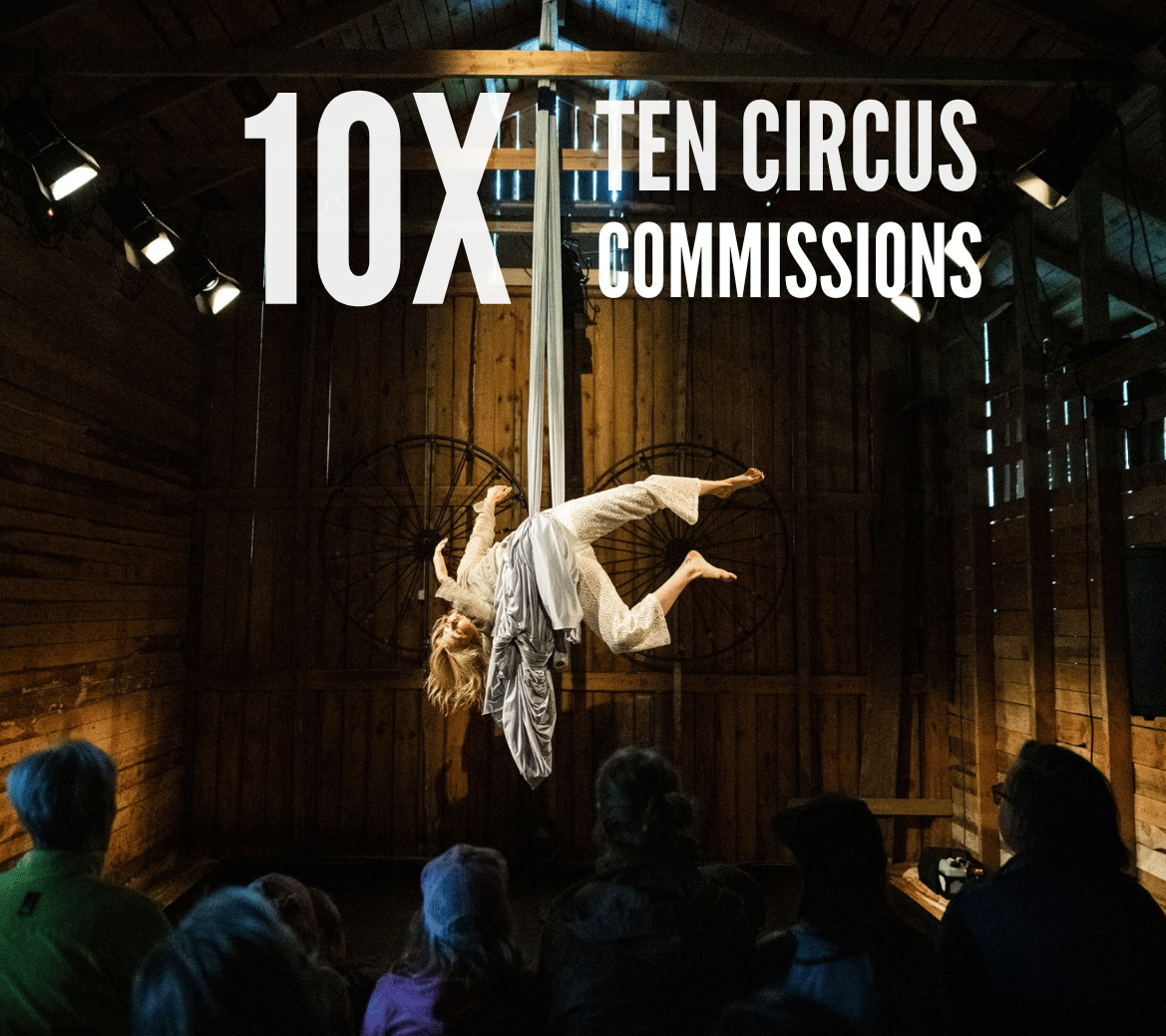
In 2022, the Arts Promotion Centre Finland awarded a special grant to the Silence Art Organisation's 10X Circus Commission project to mitigate the effects of the COVID-19 pandemic. The project was an ambitious pilot initiative aimed at testing the applicability of a commissioned work model within the circus arts sector.
The starting point for the project was the financial risk associated with creating new circus productions - a risk typically carried by the artist unless public or private funding is available to support the creation of a new work. Silence wanted to experiment with the commissioned work model, which is already well established in the field of music, if it works as a potential funding method for circus arts as well.
A commissioned work means that an entity - such as a festival, arts organisation, municipality, or similar - commissions a work from an artist or group of artists and pays a commissioning fee. This arrangement does not create an employment relationship between the artist and the commissioning party, but the fee enables the artist to focus on creating a new work without taking on personal financial risk. If desired, the artist can also seek additional commissioners or apply for supplementary funding for the work.
During the project, 10 new circus works were created, four of which were multidisciplinary, combining music and circus. Of the works, five were solo pieces, and five were created by duos or teams of three artists. Among the employed artists, eleven were Finnish and five were international professional artists. The following artists were employed through the commissioned works: Ailu Valle, Aqqalu Berthelsen, Aleksi Niittyvuopio, Marcello Nunes, Nelli Kujansivu, Matias Salmenaho, Erika Ahola, Heini Koskinen, Hanna Pakkala, Mike McCallum, Antti Paalanen, Jenny Mansikkasalo, Carla Carnerero, Aino Savolainen, Maija Hynninen and Jani Nuutinen.
THE PROJECT WAS FUNDED BY ARTS PROMOTION CENTRE FINLAND
Sustainable Art Organisation of the Future (2021-2023) was a multi-year development project aimed at building resilient and sustainable practices for an arts organization from artistic, ecological, community, and communicative perspectives. Carried out amid the crisis years, the project kept the organization alive, clarified its expertise, and enabled the creation of a stable structure for ambitious and multidisciplinary future work.
The project created space for artistic thinking directly within the organizational structures by developing employer practices, equal pay, and commissioned work models, as well as establishing multi-year positions based on artistic expertise in executive leadership. Communication and year-round visibility were developed in collaboration with media experts, following a comprehensive brand analysis that shifted the focus from selling products to acting as a non-profit, knowledge-sharing arts organization. Community sustainability was strengthened by deepening local presence and village tourism networks, enhancing regional and northern international cooperation, and reinforcing ties with the broader artistic community. Ecological expertise was accumulated by participating in sector development initiatives and mapping the organization’s carbon footprint and handprint.
The project's most significant output was the comprehensive renewal of the organization's operating model, rules, and future development strategy, along with establishing a leadership model consisting of executive directors and artistic directors. Although no artistic works were produced directly within the project, the structures and processes it enabled supported the work of over a hundred artists. As part of the project, expert presentations were organized and a final publication was written, detailing the development processes and proposing a model for a sustainable arts organization.